19 Jun 2026
Reward Pathways in Multi-Game Casinos: Integrating Free Spins with Responsible Play Strategies

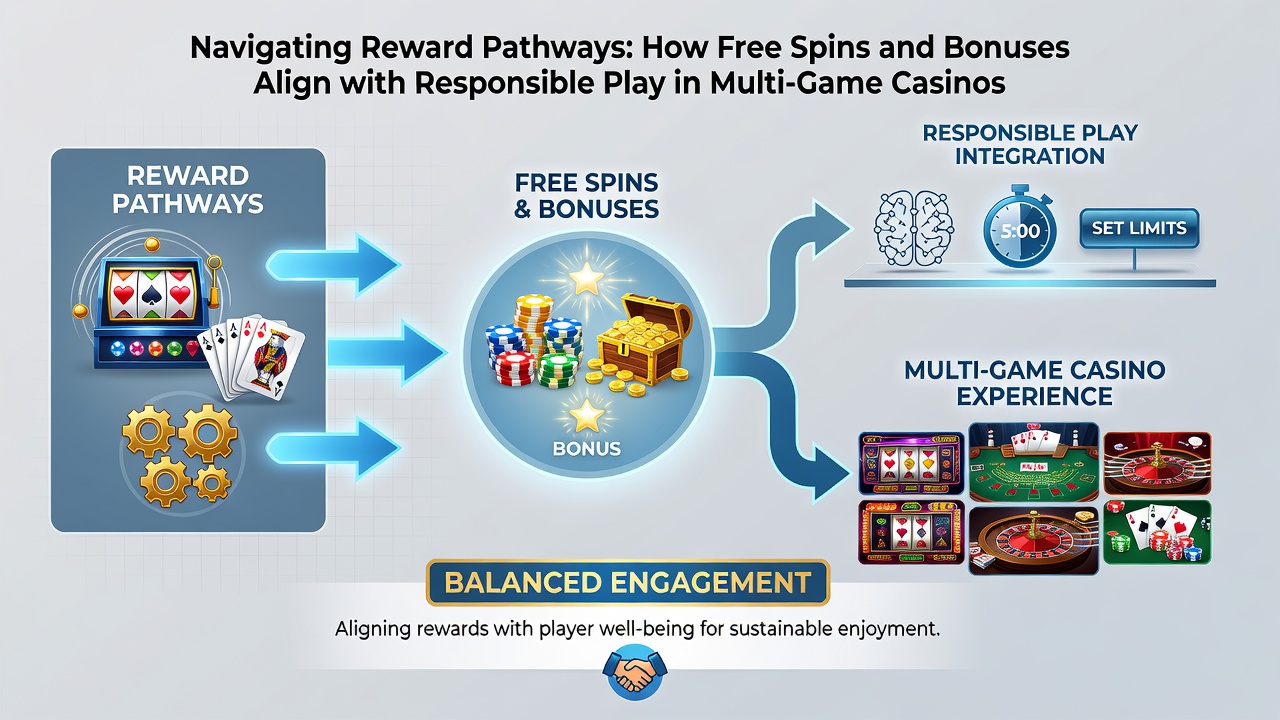
Multi-game casino platforms combine slot machines, table games, and live dealer options under one interface, and operators structure free spins along with deposit bonuses to guide player activity across these titles. These incentives appear as no-deposit free spins on selected slots or matched deposit offers that unlock additional rounds, yet platforms pair them with built-in controls such as deposit caps, session timers, and reality checks that interrupt play at preset intervals. Data from regulatory filings in multiple jurisdictions indicate that operators track bonus redemption rates alongside self-exclusion requests, which allows systems to flag patterns where repeated bonus use coincides with extended sessions.
Mechanics of Free Spins and Deposit Bonuses Across Game Types
Free spins typically activate on video slots with fixed wager values per spin, while deposit bonuses convert into playable credits usable on both slots and table games. In multi-game settings, operators apply wagering requirements that range from 20x to 40x the bonus amount before withdrawal eligibility occurs, and these requirements often exclude certain high-volatility titles from counting fully toward completion. Players encounter bonus funds that carry separate balance meters, which prevents accidental mixing with cash balances and supports clearer tracking of playthrough progress. Systems log each spin or hand played under bonus conditions, generating reports that feed into broader responsible gaming dashboards used by operators.
Player Protection Tools Embedded in Reward Systems
Many platforms integrate limit-setting options directly into the bonus activation flow, requiring users to confirm daily, weekly, or monthly deposit ceilings before claiming free spins or matched offers. Time-out functions allow temporary pauses ranging from 24 hours to several weeks, during which bonus eligibility remains suspended. Self-exclusion registers maintained at the platform level block account access entirely, and operators must reconcile these registers with active bonus accounts to prevent circumvention. Research compiled by the National Council on Problem Gambling shows that voluntary limit tools, when presented at the point of bonus claim, correlate with higher retention of players who maintain spending within preset boundaries.
Regulatory Updates and Cross-Jurisdiction Data Sharing
In June 2026 several North American and European regulators introduced standardized reporting templates that require operators to submit aggregated data on bonus usage segmented by game category and player risk markers. These templates incorporate fields for average bonus completion time, frequency of limit changes following bonus claims, and instances where players opt out of promotional offers. Platforms operating across multiple regions must map their internal systems to these templates, which encourages uniform application of responsible play prompts regardless of which game library a player selects. Figures released by the Ontario Lottery and Gaming Corporation reveal that mandatory pop-up reminders triggered after 30 minutes of consecutive bonus play reduced session lengths by measurable percentages in monitored cohorts.
Case Examples from Licensed Operators
One large multi-game operator introduced a tiered bonus structure in early 2026 that awarded escalating free spin packages only after players completed short educational modules on probability and house edge. Completion of each module unlocked additional spins while simultaneously resetting the session timer, creating a built-in break mechanism. Another platform serving Australian and Canadian markets linked bonus funds to a dynamic loss-limit calculator that adjusted available credit in real time based on prior session outcomes. Observers note that these modifications emerged after operators reviewed aggregated transaction logs showing clusters of rapid bonus redemptions followed by increased deposit activity.
Academic and Industry Research on Incentive Alignment
A study published by researchers at the University of Nevada, Reno examined transaction data from several multi-game sites and found that players who activated free spins within responsible gaming portals demonstrated lower variance in weekly expenditure compared with those who bypassed such portals. The analysis controlled for game volatility and demographic variables, revealing that the presence of visible limit-setting toggles at the moment of bonus activation produced measurable differences in play duration. Industry reports from the Responsible Gambling Council in Canada similarly document that operators who surface bonus terms alongside risk-assessment questionnaires record higher rates of voluntary deposit reductions among repeat users.
Conclusion
Multi-game casino environments continue to refine the relationship between promotional mechanics and player safeguards through integrated system design and cross-jurisdictional data standards. Free spins and deposit bonuses function within frameworks that record activity, enforce limits, and surface educational content at key decision points. As reporting requirements expand in 2026 and beyond, operators maintain records that link reward redemption patterns directly to the effectiveness of protection measures, supporting ongoing adjustments that keep both elements aligned within the same operational structure.